When women enter The Change – Part Three
When you listen closely to the language of women across generations, you begin to hear a kind of quiet poetry. Long before medicine named and measured it, women spoke of The Change. Not as a diagnosis, not as a defect, but as a passage. A threshold and a new season that arrived in its own time and asked to be met with patience, humour, and deep knowing.

The phrase “the change’ emerged in the 19th and early 20th centuries, when menopause was neither openly discussed nor clinically understood as it is today. In many Western cultures, it became a respectful coy term, partly shaped by modesty, yes, but also by reverence. It acknowledged that something fundamental was shifting without reducing it to symptoms alone. Hormones were not the centre of the story; the woman was.

What was understood intuitively, and often spoken about in kitchens, gardens, and women’s circles, was that this was not an ending. It was a reorientation; a woman was changing her relationship to time, energy, creativity, and authority. Monthly cycles softened or ceased, and with that came a subtle but profound redistribution of life force. The body was no longer organised around reproduction, but around wisdom, discernment, truth-telling and storytelling.

Anthropologists and historians have since noted that in many traditional societies, women who moved beyond their bleeding years were granted increased social and spiritual authority. They became advisers, storytellers, healers, and guardians of memory. Freed from fertility, they were seen as holding a broader view and less tethered to the immediate demands of survival, more attuned to the long arc of life. In this context, the change was not something to endure, but something to grow into.

The modern medical term menopause, from the Greek men (month) and pausis (pause), is precise but narrow. It names the cessation of menstruation, not the expansion of consciousness that often accompanies it. It only speaks to what stops, rather than what begins. And perhaps this is why so many women today feel a quiet inappropriateness. Their lived experience is far richer, more complex, and more transformative than the language often allows.

In my opinion, the return to the change is not to reject science or progress, but actually to widen the lens. To recognise that this phase is as much psychological, emotional, and spiritual as it is biological. It is a recalibration of identity, a new type of shedding, of those roles that no longer fit. A deep invitation to inhabit the self more fully, more honestly, with more sovereignly.

My mother, my nana, and my great-grandmother were not being vague when they used those words “The Change” They were being specific in a different way and were naming a truth that lives beyond charts and timelines. A truth that understands a woman’s life as cyclical, full of physical and spiritual initiations, and meaning at every stage.

Perhaps the quiet wisdom of the change is something we are ready to reclaim now, not as nostalgia, but as remembrance. 

The Collective Archetype of “The Change

And for me, with my strong sense of the archetypal world, it feels perfect to give homage to all stages of womanhood, from the cradle to the tomb, we are WOMAN…

We start as a Child at the breast, to a Maiden in bloom. We change again as the Sacred Mother and caretaker, and experience a rush of our magical, re-productive energy as the Enchantress. And then the Wise Woman, the Alchemist and the Queen fuse and become one as our “Change” finds a new beginning.

Again, a reminder that this passage of The Change is not a problem to be fixed, but a turning of the inner archetypal forces. And like all true archetypal changes, they carry within them the promise of becoming more fully who we already are.

Heart to Heart, Elizabeth

When women enter The Change – Part Two
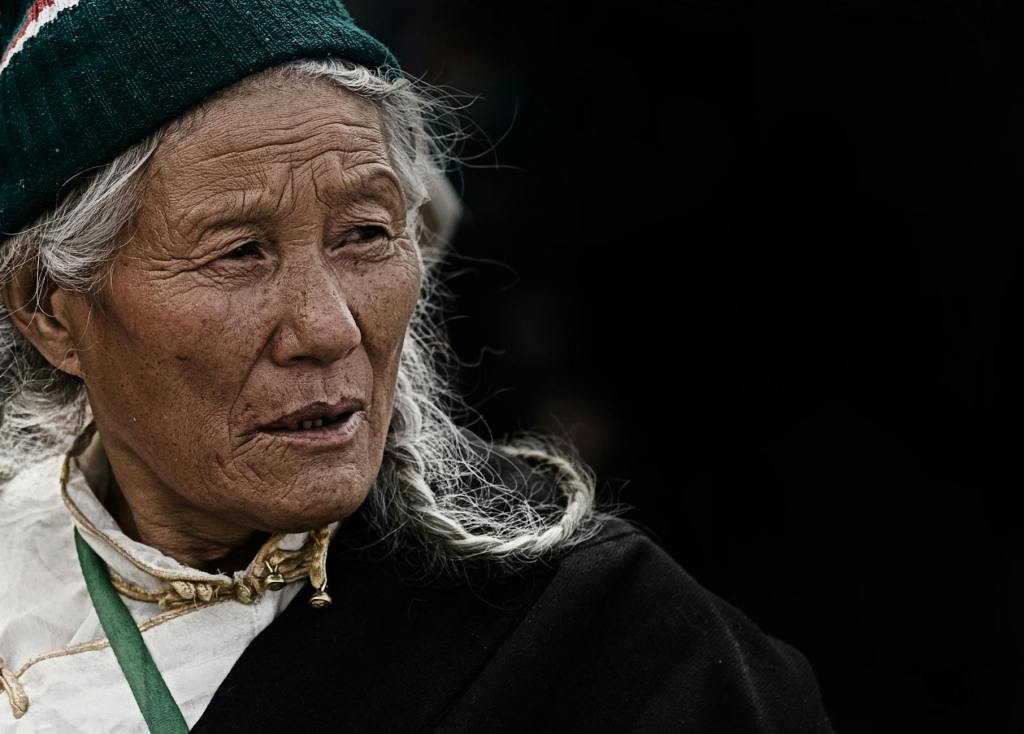
You may be wondering why I am speaking so openly about bodies, hormones, sleep, hunger, stiffness, and fatigue, especially when my work, and this space, is devoted to purpose, living attributes, and archetypes.

At first glance, it may seem left-field.

Yet for me, it sits at the very centre of a woman’s evolution.

The Living Attributes Codex is not just an abstract philosophy. It is something we feel and grow our way into, something we embody. And embodiment, especially for women, is inseparable from the seasons of the body. Purpose cannot fully anchor itself in a nervous system that feels unsafe, misunderstood, or at war with its own rhythms.

Perimenopause and post-menopause are not detours from a woman’s path. They are very important thresholds.

For many women, this is the first time in their lives that their body demands to be truly listened to rather than overridden. The first time productivity gives way to pure presence, and the first time in our lives, the old strategies stop working. This is not a failure of will; it’s a summoning into your deeper intelligence.

Over the past decade, and especially in the last five years, much has been revealed. 

Experiences once dismissed as anxiety, depression, lack of motivation, or loss of relevance are now being understood through a clearer lens. We are finally naming what women have felt in silence for generations. The fog, the exhaustion, the sudden shifts in weight, mood, sleep, and loss of identity. These were not personal shortcomings; they were misread transitions.

Our ancestors knew this; in many cultures, menopause was not medicated or considered just old age. It marked a woman’s elevation, her movement into the council, the circle of decision-making, the role of seer, strategist, and guide. Her energy was no longer siphoned outward. It was consolidated inward. The body changed because the role changed.

Seen through this lens, practices such as gentle fasting are not about fixing the body. They are about supporting the extended initiation. About helping the body reorganise itself so that one’s renewal of purpose can land cleanly, without distortion or depletion.

And that is why I speak about these things here. I am 67 this year, so this has indeed been my own experience, and I’m now well into post menopause, but I prefer not to call it that anymore. My mother, her mother and her mother all referred to it as “The Change”, and I am going to continue that tradition. I think it is a wonderful reminder of what is actually happening. 

A reminder that empowerment without change and embodiment is simply a construct or performance, and purpose without physiological support can become a strain.

The Living Attributes Codex asks a woman to live in coherence, between her values, her nervous system, her metabolism, her intuition, her attributes, her archetypes and her choices. When the body is honoured during this transition, clarity returns. 

Discernment sharpens, boundaries strengthen, and a woman no longer needs to push herself to be purposeful; she knows she is. Purpose rises naturally, as a consequence of internal alignment with the Sacred Mirroring Spiral.

The Change (perimenopause and post-menopause) is not a problem to be solved. It’s just a developmental phase that has been misunderstood, under-resourced, and historically silenced. 

When we meet The Change with education, reverence, self-trust, and self-love, it becomes deeply empowering; it is not a story of loss, but rather a story of recalibration. One of authority moving inward, and of women reclaiming their rightful centre and place in their family and community.

Your body is not broken, your purpose has not faded, you are simply entering the years where the two finally meet… You can’t have a purpose without a body, and your body knows it needs a purpose. My new mantra is LOVE MY BODY FIRST

I am very excited, I hope you are, too

Heart to Heart, Elizabeth