
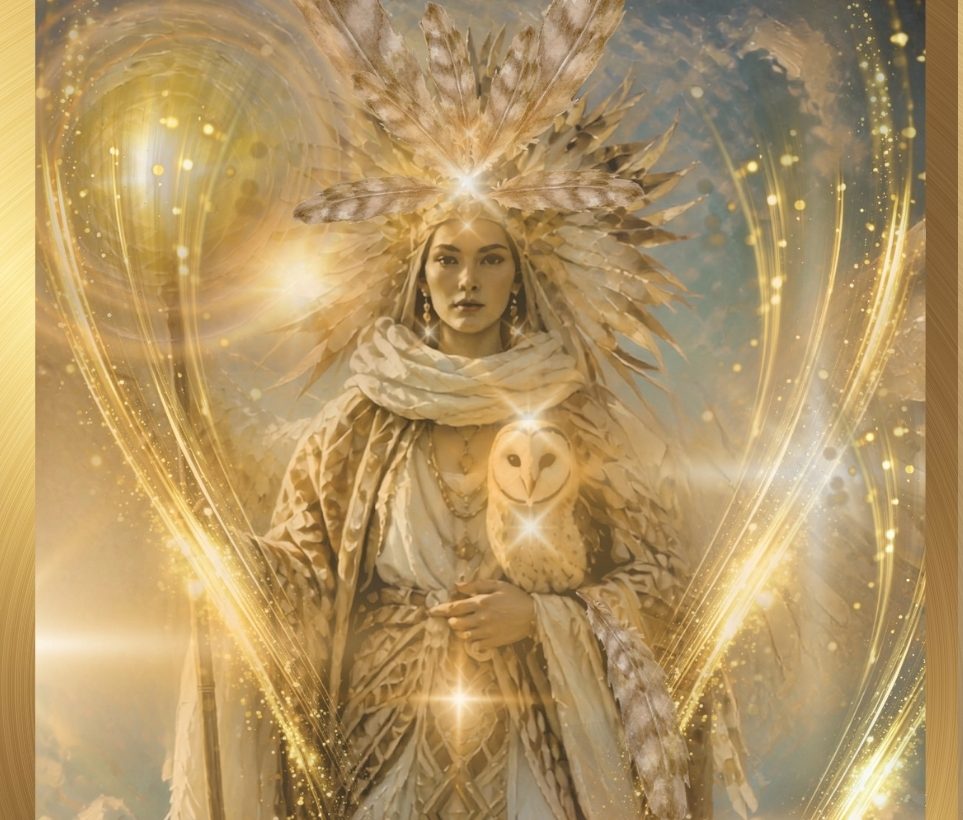
The Evolution of the Feminine
Lately, I’ve been thinking deeply about what it means to be a woman, not simply in terms of the lives we lead or the identities we have been given, but in relation to something much older and perhaps much closer to our original nature.
I keep returning to the possibility that there is something women are beginning to remember.
Not necessarily something we have consciously known or been able to put into words, but something we may have carried within us through generations, even aeons. An intelligence, an instinct, a way of relating to life and the world that has been obscured by thousands of years of cultural, religious and social conditioning.
I wonder how much of what we have come to accept as the natural order of things has been shaped by stories that were never entirely ours to begin with. Stories about who women are, what our bodies represent, how we should behave, where our power lies and what our contribution to humanity is supposed to look like. Over time, these interpretations have influenced not only how women have been perceived, but how we have learned to perceive ourselves.
And I find myself asking: “What if there is much more to our original identity than the story we have been given?”
I am not suggesting that we can simply return to some imagined past, or that there was ever one universal experience of womanhood.
Rather, I am interested in what might be emerging now as women question inherited identities, rediscover their own intelligence and begin to recognise possibilities that previous generations may not have had the freedom to explore.
I also recognise that the masculine has been shaped and restricted by inherited narratives and expectations.
Men, too, have been given particular roles to fulfil and expressions of identity to uphold. This is not simply a conversation about women reclaiming power from men. It is a much larger conversation about humanity recognising how deeply our understanding of ourselves has been influenced by the stories we have inherited, and how those stories might now be ready to evolve.
Speaking as a woman, I feel an impulse within this social and spiritual evolution that is difficult to ignore. I see it as an invitation to look beyond empowerment as something we must acquire and consider the possibility that we are remembering something that has always been within us. Perhaps this is less about finding a new identity and more about recognising an original intelligence that is ready to find expression in our time.

The Ancient Codes Within Our Stories
One of the things that has always fascinated me is the relationship between personal stories and archetypal patterns. Our individual experiences may be unique, but the deeper themes within them are often familiar. We encounter courage, strength, compassion, integrity, wisdom, creation, destruction, renewal, love, loss and the search for meaning.
These are not simply ideas. They are enduring patterns of human experience that have been explored, represented and transmitted through stories, symbols, rituals and archetypes across cultures and generations.
Many ancient Indigenous traditions understood the significance of story as a way of carrying knowledge about our relationship with the natural world, the cycles of life, our responsibilities to one another and our place within a much larger order. Stories were not necessarily intended to be understood as literal accounts alone. They could hold layers of meaning, teaching and symbolic intelligence that continued to reveal themselves through experience.
I often think about the expression “It’s written in the stars.” Perhaps this is one way of describing our relationship with archetypal patterns: that our lives are connected to something larger than the immediate circumstances we encounter. The stars have long provided humanity with a language for exploring cycles, patterns, orientation and relationship.
Similarly, archetypes offer us a way to recognise recurring expressions of human potential and experience.
The Queen, the Sacred Mother, the Wise Woman, the Visionary, the Healer, the Maiden and the Alchemist are not merely characters from ancient stories. They can also represent qualities, capacities, responsibilities and challenges that are present within human experience. Each archetype offers us a different perspective to understand ourselves, while also revealing something about the possibilities available to us.
When we begin to recognise these patterns within our own stories, we may discover that our personal experiences are connected to a much older and more extensive field of human understanding. The archetype becomes a mirror through which we can recognise our gifts, explore our shadows and understand the choices available to us.
But there is another aspect of these ancient patterns that I have been contemplating more deeply.
Ancient Codes, Contemporary Consciousness, and Future Expression
The codes may be ancient, but I can’t help wondering whether some of them were also intended for the time in which we are living now. Perhaps they were never meant to remain fixed in the historical context in which they first appeared.
Perhaps their deeper purpose was to be carried forward, waiting to be activated, recognised and understood through the evolving consciousness of future generations.
This is an important distinction because remembering does not necessarily mean returning to the past or attempting to recreate an earlier way of life. It may mean recognising that ancient knowledge contains possibilities that we are only now developing the awareness to interpret and express.
A code, in this sense, is not a rigid instruction that must be followed in precisely the same way throughout time. It is more like a living pattern of intelligence. We can recognise it, question it, interpret it, integrate it and give it expression according to the needs and understanding of our own time. Its essential qualities may endure, while the way we embody and apply them continues to evolve.
Perhaps this is part of our design as human beings: not simply to inherit, preserve and repeat what has been passed down to us, but to participate consciously in our own social and spiritual evolution.
I find this particularly interesting when considering the archetypal codes associated with feminine identity. What might courage, wisdom, creativity, compassion, intuition, sovereignty and cooperation look like when expressed by women living in the twenty-first century? How might these qualities influence the way we lead, work, create, relate and organise ourselves? And how might our understanding of these attributes contribute to a different experience of humanity as a whole?
The ancient provides a foundation, but our contemporary experience allows us to explore new expressions. We are not simply recipients of inherited knowledge. We are participants in its continuing interpretation and expression.
This is where I believe the relationship between remembering and evolution becomes so important. We can honour what has been carried forward without assuming that its meaning is exhausted by the past. We can recognise the wisdom within an ancient pattern while allowing our understanding of it to expand.

The Evolution of My Own Work
Looking back across my own writing and work, I can see that this inquiry has been developing through several books, each exploring a different aspect of the same fundamental question: “Who are we, beyond the identities and expectations we have inherited, and what becomes possible when we recognise and express more of our potential?”
- My first book, My Story, My Soul, explored the relationship between personal story and the deeper understanding of who we are. It invited us to look beyond the events of our lives and consider what our experiences might reveal about our identity, purpose, and inner development.
- My second book, Light Leadership, extended that inquiry to how we lead our lives. I have always believed that true leadership begins with being the leader of your own life. It is not simply about position, authority or influence, but about recognising our potential, taking responsibility for our choices and learning to express our gifts in ways that contribute to the lives of others.
- My third book, The Living Goddess Code, took me further into the exploration of feminine identity, ancient wisdom and archetypal intelligence. It was an exploration of the possibility that there are deeper patterns of feminine expression that have been obscured, misrepresented or overlooked through history, and that reconnecting with them might support women in recognising more of their original nature and potential.
- Now, as I develop my fourth book, The Living Attributes Codex, I find myself exploring another dimension of this same inquiry: the living qualities of consciousness and how we can recognise, integrate and embody them in our everyday lives. The emphasis is not simply on understanding an attribute as an idea, but on experiencing how it operates through our thoughts, feelings, relationships, decisions and actions.
As I look at these four books as a whole, I can see an unfolding exploration: understanding ourselves through our personal stories, learning to lead our own lives, remembering the deeper intelligence within feminine identity, and discovering how the attributes of consciousness can be consciously embodied.
They are not separate subjects. They are interconnected expressions of a continuing inquiry into human identity, purpose and conscious evolution.
Beyond the Story We Have Been Given
One of the most important questions we can ask ourselves is whether the identity we have come to accept is an accurate reflection of our original potential, or whether it has been shaped by a much narrower understanding of who we are.
For women, this question can be particularly significant because so much of our history has been interpreted through systems in which feminine experience was defined, regulated or diminished. We have inherited stories about what women should be, how they should behave, what constitutes acceptable power and which expressions of intelligence or authority are valued.
Yet when we begin to explore the archetypal patterns within our own stories, we may recognise qualities that don’t fit comfortably within those inherited expectations.
The woman who leads, creates, questions, protects, heals, teaches, explores or challenges convention is not necessarily stepping outside her nature. She may be expressing a part of herself that has not previously been recognised or encouraged.
This is not about replacing one prescribed identity with another. Nor is it about suggesting that every woman must identify with a particular archetype or expression of femininity. Our diversity is essential. We each carry different combinations of qualities, experiences, perspectives and potential, and our individuality deserves to be recognised rather than constrained by another set of expectations.
The same principle applies to men. As we explore the limitations of inherited masculine and feminine identities, we create opportunities for both to evolve. Strength need not be separated from compassion, authority from collaboration, or receptivity from purposeful action. We can begin to recognise that these qualities are not opposing forces but complementary capacities within our collective human experience.
Perhaps this is part of what we are being invited to explore now: not a return to a romanticised past, but a more integrated understanding of ourselves and a more genuine our relationship with one another.
A Different Understanding of Empowerment and Leadership
I know that the language of women’s empowerment doesn’t resonate with everyone, and I understand why. Sometimes the word suggests that power is something we must acquire, earn or have granted to us. But what if the deeper invitation is to recognise the power, intelligence and potential that have always been present, even when they haven’t been acknowledged or supported?
For me, liberation begins with recognition. It is the freedom to question the stories we have inherited, to understand our own experiences and to make choices that reflect a more authentic expression of who we are.
This has always been central to my understanding of authentic leadership. When women recognise their own qualities and potential, they have a different foundation from which to lead. They are less dependent on external definitions of success and more able to contribute through their own particular gifts, perspectives and experience.
It also opens the possibility of a different kind of leadership, one that values cooperation, collaboration, connectivity and shared responsibility. This doesn’t mean abandoning individual strength or ambition. It means recognising that our capacity to create meaningful change is enhanced when we understand how our individual contributions relate to the wider whole.
I believe women have an important role to play in this evolving experience, not because women are inherently one way and men another, but because the historical imbalance in how feminine qualities have been valued and expressed needs to be understood and addressed. There is much to explore about the intelligence of relationship, the value of cooperation and the capacity to lead without needing to dominate.
When we begin to recognise these qualities within ourselves, we can bring them into our families, communities, workplaces, creative endeavours and the wider social structures in which we participate. This is where personal evolution and social evolution meet.

Remembering Is Part of Evolving
The most interesting aspect of this exploration is that remembering and evolving are not separate processes. We can remember something ancient while simultaneously discovering something new about its meaning and potential. We can honour the wisdom carried through generations while recognising there’s a responsibility to interpret and express it in ways relevant to the world we are now living in.
I don’t believe we are here simply to repeat the experiences of previous generations or preserve inherited identities without question. We are continually receiving, responding, interpreting and evolving. Our personal stories are influenced by the past, but they are also shaped by the awareness, choices and relationships we bring to the present.
This is why I find myself returning to the idea of an original code. Perhaps it is not a fixed blueprint that tells us exactly who we are supposed to be. Perhaps it is a living field of potential, expressed through archetypal patterns, human attributes and the many different ways consciousness finds expression through us.
If so, our task is not simply to rediscover what has been forgotten. It is to participate in what is emerging, to bring greater awareness to the qualities we carry and to explore how they might contribute to a more conscious and connected humanity.
I began this reflection thinking about women remembering something deep within themselves. I find myself now considering a much larger possibility: that humanity is being invited to remember, recognise and reinterpret something of its original intelligence, while giving that intelligence new expression through our own timeline.
Perhaps we were never meant to simply remember the ancient codes.
Perhaps we were meant to carry them forward, interpret them through our evolving consciousness and give them expression in the world we are creating now.
And maybe this is the deeper relationship between our origins and our future: we inherit patterns, we interact with them, we bring awareness to them and, through our choices and relationships, we contribute to their continuing expression.
We are each remembering our original codes, not simply to reclaim who we were, but to participate more consciously in who we are evolving into as new humans.
Heart to Heart, Elizabeth
Leave a Reply