
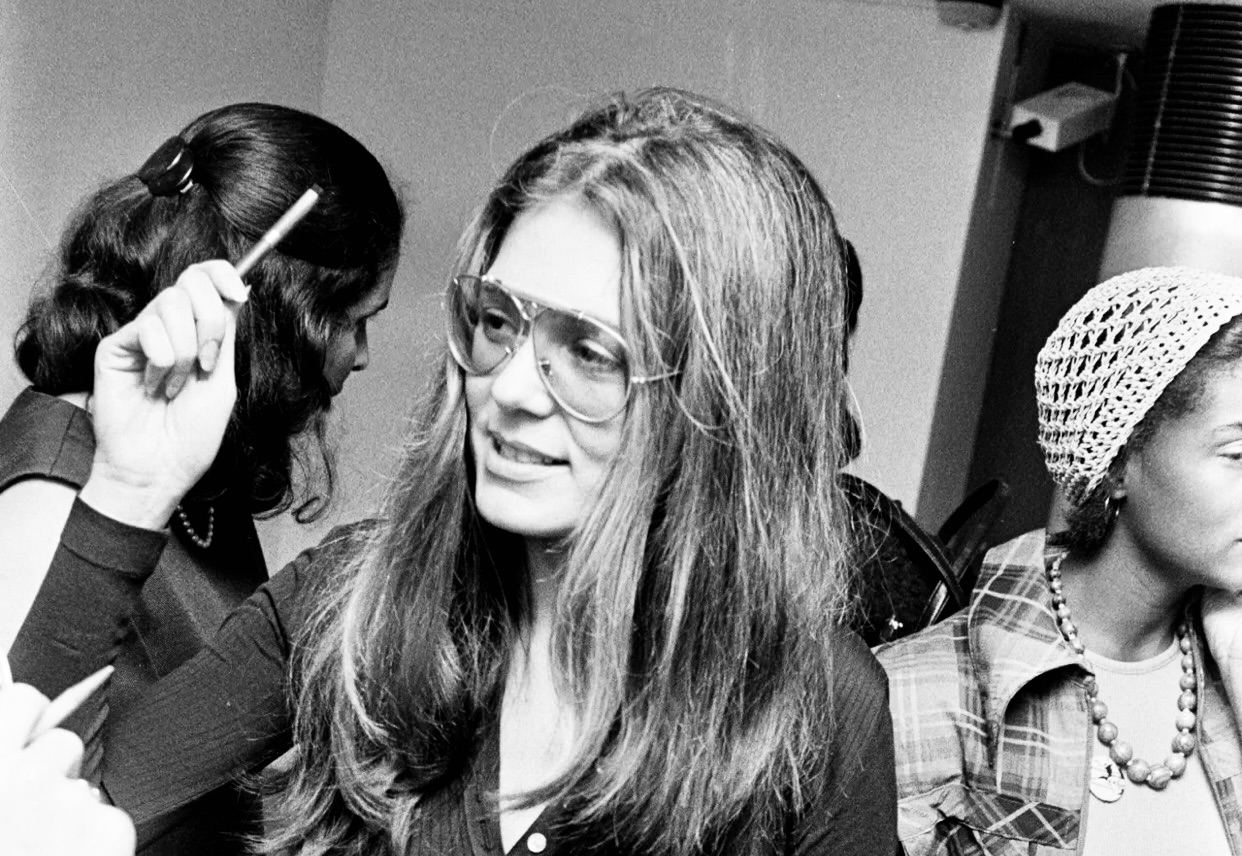
Gloria Steinem has always represented something much larger than a political movement. She represents the courage to question the stories we have been given about who we are, what we are capable of, and where we belong.
In her 1992 University of Washington interview about Revolution from Within: A Book of Self-Esteem, Steinem explored an idea that feels profoundly relevant to the work of the Living Attributes Codex: that many of the problems we experience collectively begin with our relationship with ourselves.

This is an important distinction.
Self-esteem is often understood as confidence, achievement or feeling good about oneself. But Gloria was pointing towards something deeper — an inner recognition of inherent worth. The understanding that we do not have to earn our right to exist, belong, speak, create, lead or become who we are.
And when I speak about worth, I do not mean monetary worth. We have become accustomed to measuring worth through income, productivity, status, possessions, appearance, achievement and social recognition. We can unconsciously begin to believe that the more we produce, earn or accomplish, the more valuable we are.
But a human being’s worth cannot be calculated on a balance sheet.
Your worth is not determined by your salary, your age, your job title, your relationship status, your social standing or how much you have accumulated. Nor does it disappear when you become less productive, retire, experience failure or move into a different chapter of your life.
Your Worth is Intrinsic.
It belongs to the human being before achievement. It is the inherent value of being alive, conscious, unique and capable of experiencing, learning, loving, creating and contributing.
This is particularly important as we move through the later chapters of life. Our culture can place enormous emphasis on youth, productivity and economic contribution, sometimes making people feel that their value diminishes when their role or capacity changes.
The Living Attributes Codex offers another way of seeing this. We are not human beings who become valuable because of what we do.
“We are beings of inherent value who then have the opportunity to express that value through what we do.”
When that recognition is absent, we become vulnerable to external definitions of ourselves. We can begin to live according to expectations rather than our essence.
We can mistake conformity for belonging, approval for love, and achievement for worth.
We can also unconsciously allow culture, family, religion, gender, race, class or social conditioning to tell us who we are before we have had the opportunity to discover that for ourselves.
I can now see how my work and I have unknowingly been shaped by the roots of feminism, due to growing up in the 60s and 70s and, of course, my life experiences.
This is where I see such a strong connection with the Living Attributes Codex.
The Codex is fundamentally concerned with the journey from identification to embodiment.

We are born with an extraordinary potential for unique expression. Yet, very early in life we begin receiving messages about what is acceptable, desirable, feminine, masculine, successful, beautiful, intelligent, spiritual or worthy.
Some of these messages nourish us. Others become invisible boundaries around our lives.
Gloria Steinem’s observation that society can even ridicule people who openly demonstrate positive self-esteem is particularly revealing. There are cultures and communities in which confidence in oneself is perceived as arrogance, particularly when expressed by people who have historically been expected to remain smaller, quieter or more accommodating.
And this is where your core self-esteem becomes a form of inner sovereignty. To know your worth without needing another person’s permission is revolutionary.
Not because you become superior to anyone else, but because you no longer need to make yourself inferior for somebody else to feel comfortable.
The Living Attributes Codex asks a similar question:
What remains when we begin to remove the identities we have been conditioned to carry?
Gender and race, for example, are powerful social constructs that have historically been used to categorise human beings and assign meaning, privilege, limitation and expectation. They can profoundly influence our lived experience, and we should never dismiss the very real consequences of discrimination and social conditioning.
But they are not the entirety of a human being.
There is an individual consciousness beneath those labels.
There is an intelligence, creativity, temperament, imagination, capacity for love, and a unique combination of attributes that a category can’t fully describe.
This is why I believe our work is not about rejecting our identity. It is about becoming conscious of it. We can honour where we come from without allowing our origins to become the boundaries of our potential.
We can recognise the stories that shaped us without allowing those stories to become the final definition of who we are.

This is one of the great movements of consciousness: moving from “This is who I have been told I am” to “Who am I truly here to be?”
Within the Codex, I call this Living Attributes Alchemy: the process of transforming what has been inherited, conditioned, or experienced into conscious attributes that can be embodied in different ways.
- Our experiences become part of our wisdom.
- Our challenges can become discernment.
- Our wounds can become compassion.
- Our questioning can become knowledge.
And our individuality can become contribution. This is also why I believe positive self-esteem and purpose are intimately connected.
When we don’t recognise our inherent value, it is difficult to trust our inner knowing. We look outside ourselves for permission, wait for someone to tell us that we are ready, compare our journey with somebody else’s and shape ourselves around expectations.
But when we begin to know ourselves from within, something changes.
We become more willing to listen to the quiet intelligence of our own souls, more courageous in expressing our unique gifts, and, eventually, our personal evolution can contribute to the collective’s evolution.
This is the deeper revolution. It does not begin with changing everybody else. It begins with becoming conscious of the authority we have surrendered within ourselves.
Gloria Steinem’s legacy reminds me that social transformation and inner transformation are not separate movements. The outer world is continually influenced by the consciousness, beliefs and behaviours of the people who participate in it.
The revolution within, therefore, matters.
Because when a human being discovers their inherent worth, they become less willing to participate in systems that require another human being to be diminished.
When we know ourselves, we are less threatened by difference, we value our own unique expression, make room for someone else’s, and understand that no label can contain the entirety of a human soul.
And then we can begin to see one another differently. Perhaps this is one of the great invitations of our time:
Know who you are beneath the labels.
Trust what you carry.
Know what you have inherited.
Trust what you are ready to release.
And most importantly, know and trust what you have come here to offer as your expression.
That, to me, is where the inner revolution becomes your Living Attribute.
And that is where your core self-esteem becomes purpose, your purpose becomes power, and your personal transformation becomes collective change.
Heart to Heart, Elizabeth
Leave a Reply