Phoebe Anna Traquair: A Visionary of the Celtic Revival

In a letter to her nephew, Phoebe Anna Traquair writes:

“To the artist, be he the poet, painter or musician, the world is a great treasure house, stored with endless material for him to use, teach yourself to match the beauty of red-lipped buds, sunlight through green leaves, the yellow gorse on the hill, the song of the wild birds, so on, step by step, the world opens out. This is life. This is to live, the perfection comes when one’s own life is in harmony with this beauty” 

I recently stumbled upon an artist of remarkable depth and vision—though, in truth, I had already encountered her work without realizing it. For some time, I have been captivated by The Progress of the Soul, a breathtaking four-panel tapestry that speaks to the very essence of transformation and spiritual evolution.

Yet, until now, I had been unable to find other works in a similar style, and for good reason—the original source where I discovered the image had misattributed the piece! No wonder my search had felt like chasing shadows. But now, with her name illuminated before me, I am uncovering the brilliance of an artist whose legacy is far more expansive and profound than I first imagined.

THE PROGRESS OF A SOUL
  • The Progress of a Soul: The Entrance, 1895 (Panel One) Silk and gold thread embroidered on linen

This is the first from a suite of four embroidered panels which follow the journey of the human soul to heaven. It illustrates the happy stage of hope and innocence when the soul is in tune with nature, unaware of the realities of life. The theme was inspired by a performance of Richard Wagner’s opera Parsifal, which premiered in Germany in 1882. It was also loosely based on Denys L’Auxerrois (1887) by Walter Pater (1839-1894), a tale about the god Dionysus living as a priest in medieval France.

  • The Progress of a Soul: The Stress, 1897 (Panel Two) Silk and gold thread embroidered on linen

Here the forces of evil begin to invade the soul’s world and destroy all precious, living creatures. Hands reach out for flowers, birds and even the soul’s tunic, while a snake entwines one leg. The figure is reminiscent of both Orpheus (with his lyre) from Greek mythology and Denys l’Auxerrois. Pater described Denys, a character in a 13th-century tapestry, as a flaxen and flowery creature, sometimes well-nigh naked among the vine leaves … with all the regular beauty of a pagan god’.

  • The Progress of a Soul: Despair, 1899 (Panel Three) Silk and gold thread embroidered on linen

Pater described Denys l’Auxerrois as a ‘suffering, tortured figure’. – Traquair provided her own explanation of the embroideries, asserting that in this scene ‘frustration, disillusionment and despair have gained the upper hand’. She employed a vast range of coloured silks for each panel, using traditional and more fashionable stitches to create the rich, textured effect. They included laid and couched work (also used in the 11th-century Bayeux Tapestry) for the vine leaves.

  • The Progress of a Soul: Victory, 1902 ( Panel Four) Silk and gold thread embroidered on linen

Here the human soul is welcomed into heaven, awoken from death with a kiss from a red winged angel. According to Phoebe Anna Traquair, this final panel symbolised ‘ultimate salvation by the grace of Higher powers, rather than the merits of the individual’. She based the design around Pater’s description, not of Denys, but of a ‘wine-god who had been in hell’. As customs labels on the back of each panel confirm, all four embroideries were exhibited at the St Louis Exposition in the USA in 1904.

Phoebe Anna Traquair

Phoebe Anna Traquair was a force within the Celtic Revival and the Scottish Arts and Crafts Movement of the early twentieth century. Though celebrated as a Scottish artist, she was, in fact, born in Dublin, Ireland, in 1852. Her artistic journey began at the School of Design in Dublin, where she honed her craft before moving to Edinburgh in 1874. This relocation came after her marriage to Dr. Ramsay Traquair, a distinguished naturalist who would later serve as the Keeper of Natural History at Edinburgh’s Museum of Science and Art.

Traquair’s work was deeply influenced by the Pre-Raphaelites, William Morris, and the Arts and Crafts Movement, as well as the visionary mysticism of William Blake and the luminous storytelling of early Italian Renaissance painters—the very period that inspired the Pre-Raphaelite Brotherhood (so named for their reverence of art before Raphael). She corresponded with the eminent critic John Ruskin, was a friend of William Holman Hunt, and, through sheer dedication, carved out a career that earned her international acclaim as an artist, designer, and craftswoman.


Phoebe Anna Traquair

Her body of work is staggering in its range and ambition. While she produced a number of traditional paintings on canvas and panel, her artistry extended far beyond conventional boundaries. She was a master of mural painting, book illumination, embroidery, enameling, and tapestry, infusing each medium with an almost sacred quality—her work radiates with spiritual symbolism, intricate storytelling, and a sense of the divine feminine.

An incredibly skilled embroiderer, Phoebe Anna Traquair produced a body of stunning tapestries, including The Salvation of Mankind:

Perhaps most astonishing is the sheer scale and vision of her mural work, particularly in Edinburgh. She transformed spaces into realms of transcendence, painting vast ecclesiastical frescoes that shimmer with otherworldly beauty. Her most famous murals, including those in Mansfield Traquair Church, have been likened to the Scottish equivalent of the Sistine Chapel—testament to her ability to fuse art, myth, and spirituality into something truly divine.

Her legacy, once overshadowed by misattribution and historical oversight, is now being rightly reclaimed. The more I learn about Phoebe Anna Traquair, the more I feel she was not only an artist but a visionary—a woman who painted with a soul that spanned across time, bridging the mythic past with the ever-evolving present.

Have you encountered her work before? If not, I encourage you to dive into the luminous world she created—it is nothing short of awe-inspiring.

Heart to Heart, Elizabeth

Reclaiming Our Sacred Birthright!

Today I am talking about the sacred practice of singing, dancing, storytelling and being creative.

Somewhere along the way, we lost something sacred. Singing, dancing, storytelling, and creating—once natural, instinctive expressions of the soul—became “skills” to be perfected rather than sacred acts of being. Now, we measure them by achievements, judge them by technique, and rank them by ability. The modern world has convinced us that the point of doing them is to “get good” rather than simply to be in them.

But what if we remembered the truth?

What if we saw these acts not as performances but as prayers? Not as talents to be evaluated but as echoes of something ancient and divine? What if we recognized them as the ways Spirit moves through us—guiding our voices into song, our bodies into dance, our hands into creation?

Birds do not take singing lessons, yet they fill the dawn with music. Bees do not perfect their technique before building, yet their hives form intricate sacred geometry. They do what they were created to do, instinctively and unapologetically. And so did we—before we were told to measure, compare, and judge.

Of course, mastery can be an offering, a devotion to the craft. But when we strip away the need for approval, we find the real essence of creation: the simple, sacred act of doing and becoming one with our creativity. Singing becomes a form of communion. Dancing becomes a prayer. Art becomes a portal.

Imagine a world where we sang because our souls longed to vibrate with the universe. Where we danced because the rhythms of the Earth called us into movement. Where we created not for validation but because Spirit is always creating through us.

This is about reclaiming our birthright. Returning to the truth that these expressions belong to all of us—not just the trained, the praised, or the polished. The song, the dance, the story, the art—they are ours, always have been, and always will be.

So, let’s sing—off-key, in harmony, as a whisper, as a roar. Let’s dance—wildly, softly, unashamedly. Let’s create—not to impress, but to commune, to heal, and to remember we are one with creation.

Because this is what humans do. And we were never meant to stop.

Heart to Heart and Blessings Abound.

The Artist as a Visionary of the Unknown

In every age, artists stand at the threshold of the unseen, the unspoken, and the yet-to-be-discovered. They are the first to articulate the unknown, weaving threads of whispers into form, word, image, and sound that awaken something ancient and infinite within us. It is their courage to commune with the intangible that propels the evolution of consciousness and culture.

In a healthy society, the artist’s role transcends entertainment or decoration; it is sacred. They are the spiritual mapper, charting realms that have yet to enter the collective awareness. They translate the messages from the divine, the murmurings of the cosmos, and the buried truths of the soul into expressions that we can collectively hold and understand.

Deeper Truths

Art has always been the vehicle through which humanity glimpses its deeper truths. Before we can name or grasp the complexities of our existence, the artist offers us a reflection—a song, a painting, a poem—that hints at something beyond our current knowing. These works are like lanterns on a dark path, illuminating what we are only beginning to comprehend.

But this role requires profound sensitivity and bravery. To bring the unknown into the light is to step into the space between worlds where certainty dissolves. It demands that artists become vessels, open to inspiration that often comes uninvited, yet insistent. They must trust the process, even when it feels like leaping into the void, because they know their work is not just for themselves but for the whole.

The Artist’s Vision

A culture that honour its artists creates space for these revelations to emerge. It understands that the artist’s vision is not separate from the collective but an essential aspect of it. Through their creations, artists introduce us to new archetypes, new paradigms, and new ways of being. They challenge us to see differently, to feel more deeply, and to remember that life is not just about survival but about transcendence.

When I reflect on the role of the artist, I see them as spiritual midwives, bringing the soul of a new age into form. They remind us of our interconnectedness and call us to expand into the fullness of our humanity. To be an artist is to accept a divine responsibility, to act as a conduit for beauty, truth, and transformation.

So let us honour the artists—the poets, the painters, the dancers, the musicians, and all who create with intention and vision. They are the ones who help us navigate the unknown, who lift the veil between the seen and unseen, and who bring us closer to the essence of what it means to be alive.

In their courage and devotion, they show us that the act of creation is not just an expression of individuality but a profound offering to the collective soul of humanity. Let us listen, let us witness, and let us be transformed by their gifts.

For in their art, the mystery of life finds its voice, and we are reminded that the unknown is not something to fear but something to embrace as the birthplace of all possibility.

Heart to Heart, Elizabeth

Reclaiming the Power of Imagination

A Gateway to Deeper Reality

In today’s fast-paced, logic-driven society, imagination often gets a bad rap. The word “imaginary” is commonly used as a synonym for “unreal” or “make-believe,” dismissing it as frivolous or disconnected from practicality. Similarly, the word “myth” has been stripped of its original richness, now reduced to mean little more than “a lie.” It’s as if our collective understanding has relocated these concepts to the realm of childhood, implying they no longer have a place in adult life.

But what if we’ve misunderstood?

What if the imagination is not just a tool for escapism or creative play, but something far more profound—our gateway into interdimensional reality?

When grown adults allow themselves to dwell in the world of imagination—daydreaming, contemplating, or diving into the timeless truths of myths and stories—they risk being labeled as “dreamy” or accused of “having their head in the clouds.” But here’s the truth: the imagination is not a departure from reality; it is a portal to the deeper layers of existence.

A person who values their imagination, who takes time for contemplation or seeks wisdom in myths and stories, is actually more connected to the world, not less. They are engaging with the unseen dimensions of reality—the archetypal rhythms and energetic patterns that shape not only our material world but the vast, interconnected web of all life. The imagination allows us to access these realms, to intuitively perceive truths that transcend the physical and rational.

Why Imagination Matters

  • Connection to Archetypes: Through imagination, we access universal symbols and patterns that hold the keys to deeper understanding.
  • Gateway to Interdimensional Reality: The Imagination allows us to perceive and interact with realms beyond the physical, offering profound insights into the nature of existence.
  • Wisdom in Myths and Stories: Myths are not lies; they are ancient maps of the soul’s journey, encoded with truths that speak to our collective and individual experiences.
  • A Tool for Transformation: The Imagination helps us bridge the material and spiritual, enabling personal and collective growth.

In a world that prizes productivity and measurable outcomes, we’ve lost sight of our imagination’s essential role. It’s not just for artists or dreamers—it’s for anyone who seeks to live deeply, to see beyond the immediate, and to engage with life on a symbolic and spiritual level.

So, let’s reframe the narrative. I invite you reclaim your imagination as your gateway to the infinite. And honour the myths and stories that whisper truths from dimensions beyond your own. Let’s remember that to dream, to wonder, and to create is not to escape life—it is to inhabit it fully, with all the beauty, mystery, and complexity it offers.

Your imagination is not a luxury. It is a sacred tool, a doorway into interdimensional reality, and a profound necessity for a meaningful and connected human experience.

Heart to Heart, Elizabeth

Embracing Diversity: Respecting Spiritual Culture
Today, I am talking about Spiritual Culture…

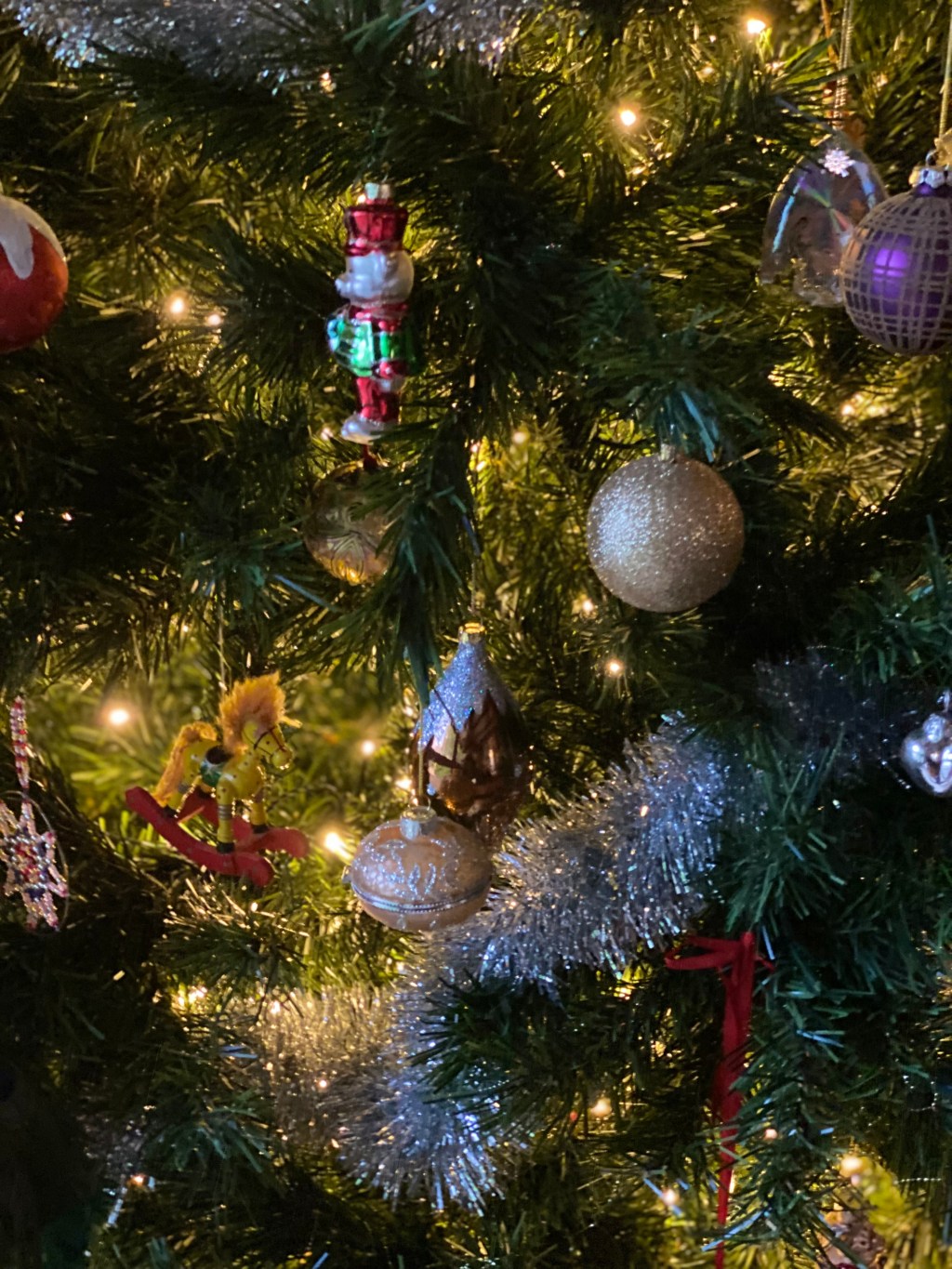
In a world filled with diverse cultures and beliefs, it’s essential to appreciate and respect the various holy days celebrated by different communities. For many, Christmas is one festive occasion when families celebrate joy, love, and togetherness. However, it’s important to remember that not everyone observes the Holy feast of Christmas, and that’s perfectly okay.

Diversity is what makes our world rich and vibrant. Our collective story is woven with different traditions, customs, and celebrations. While embracing and sharing in the joy of various festivities is lovely, it’s equally essential to tread carefully and respect the origins and meanings behind each holy day. (Holiday)

The idea that “you can’t hijack a religious holiday” highlights an essential aspect of cultural sensitivity. It’s a call to recognize that just because one may not follow a particular faith or belief, it doesn’t grant the liberty to alter a religious celebration’s name, story, or essence. With its roots deeply embedded in religious significance for many, Christmas deserves the respect of preserving its identity.

Celebrating diversity doesn’t mean appropriating or altering the traditions of others. It means acknowledging and appreciating the differences while fostering an environment of inclusivity. Let people celebrate uniquely without diluting the cultural and religious essence that makes each celebration unique.

It’s a reminder that diversity extends beyond the array of holiday celebrations. It encompasses the beauty of coexistence, where individuals of different backgrounds can come together, sharing in the richness of their unique culturals. Everyone is entitled to celebrate in a manner that aligns with their beliefs. Still, it’s equally important to do so with reverence and understanding.

Throughout the ages, diverse communities worldwide have marked this season with their unique festivities. From ancient winter solstice celebrations to the Roman festival of Saturnalia and the Norse Yule, each carried its distinct spiritual significance.

These historical practices remind us that the season has long been a time of reflection, renewal, and connection with the divine across different belief systems. By acknowledging the multitude of spiritual practices intertwined with Christmas, we gain a broader perspective on the universal themes of hope, light, and the triumph of good over adversity. This recognition serves as a testament to the inclusive nature of the holiday season, showcasing the ability of traditions to transcend cultural and religious boundaries, weaving a global web of shared humanity during this festive time.

In conclusion, let us celebrate the diversity of our world with open hearts and minds.

Allow Christmas to be Christmas, Hanukkah to be Hanukkah, and Eid to be Eid. By doing so, we contribute to a harmonious coexistence where everyone can cherish their traditions without fear of violation. After all, the magic of the holiday season lies not just in the celebrations but in the respect we show for one another’s Spiritual Cultural.

Heart to Heart and Blessings Abound

Archetypal Revelations: My Passion for Life, Storytelling, and Purpose

Hello, beautiful Souls,

Today I am talking about my on going encounter with archetypes…

Throughout my life, I’ve had the unique ability to effortlessly identify archetypes in people. It’s a skill that comes naturally to me, almost like an intuitive understanding that goes beyond mere observation. What sets this ability apart is the vivid imagery that accompanies each archetype, as if a specific scene or story unfolds before me.

This gift has become the catalyst for a journey of wonder. It has motivated me to delve deep into the world of archetypes and their intricate roles in shaping not just our present lives but also our past ones. As I navigate through this human experiences, I find myself drawn to the deep impact archetypes have on our understanding of self and others.

This exploration has kindled a passion within me to unravel the layers of archetypes, storytelling, and life purpose. I am inspired to not only comprehend the archetypal patterns that manifest in individuals but also to discover narratives that connect these patterns, creating insight into the human psyche and our personal mythology.

Motivated by this unique gift, I have embarked on a journey of writing. Through my books, I seek to articulate the blend between archetypes and the stories that unfold in our lives. My passion has always been to share insights that transcend the boundaries of time and space, bridging the gap between the tangible and the metaphysical.

I love exploring the symbiotic relationship between archetypes and the narratives that shape our destiny. From the hero’s journey to our shadowy depths, each archetype contributes to the grand narrative of our continued rebirth. Helping people to decipher their stories, I shed light on the connections between our past, present, and future.

This journey is not just a personal odyssey but a shared journey of the human experience. Through my books on archetypes, spiritual culture, storytelling, and life purpose, I aspire to invite others into this realm of sacred beauty, introspection and self-discovery. In doing so, I hope to foster a greater understanding of the magical threads that weave the fabric of our collective experience.

As I navigate the realms of archetypes, my commitment is to remain neutral, allowing the stories to unfold organically and respecting the diverse narratives that shape human beings. It is my belief that in embracing the archetypal richness of life, we can unlock valuable insights into our purpose, fostering a collective journey towards a renewed humanity.

Heart to Heart, Elizabeth

Thank you for reading my blog