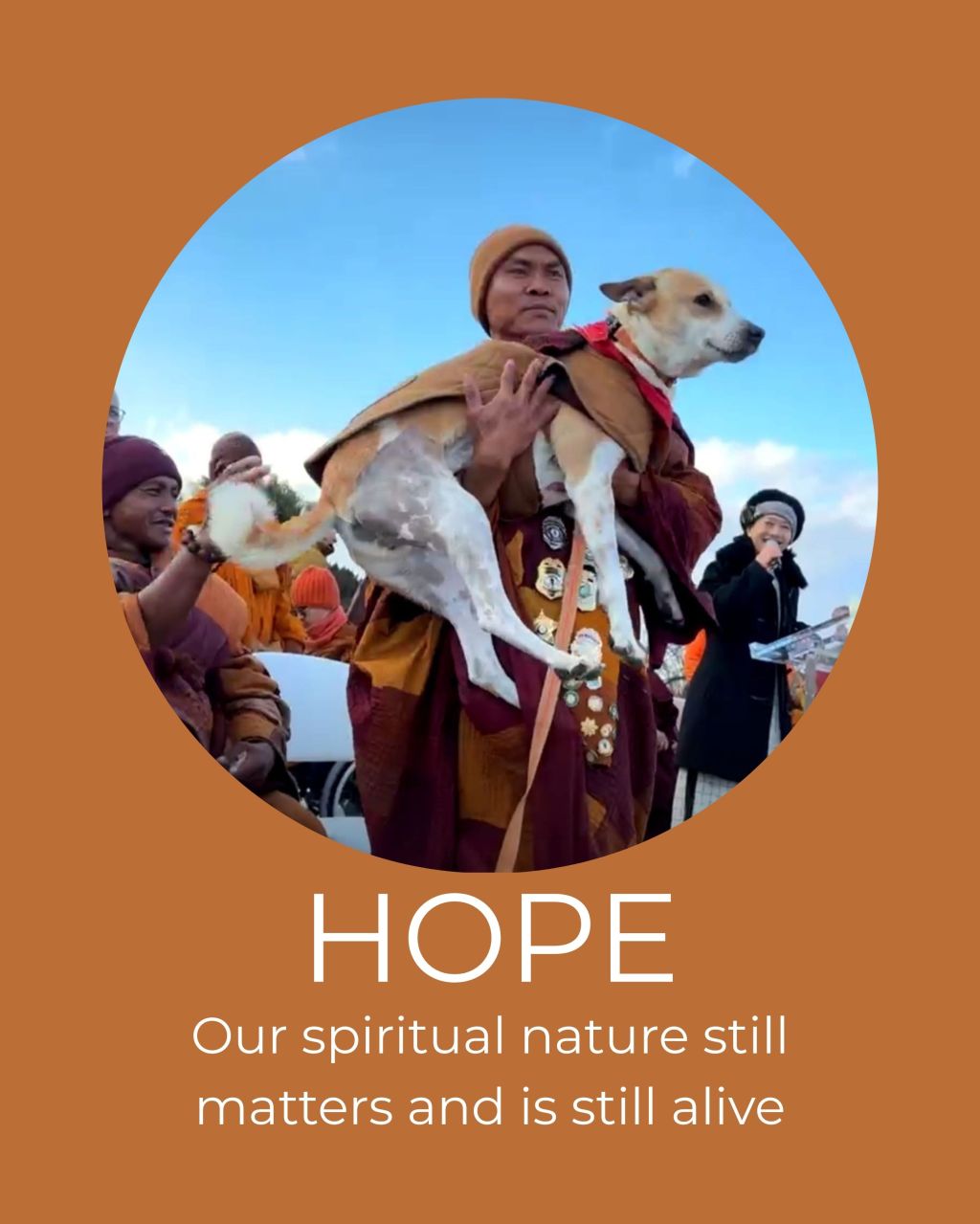
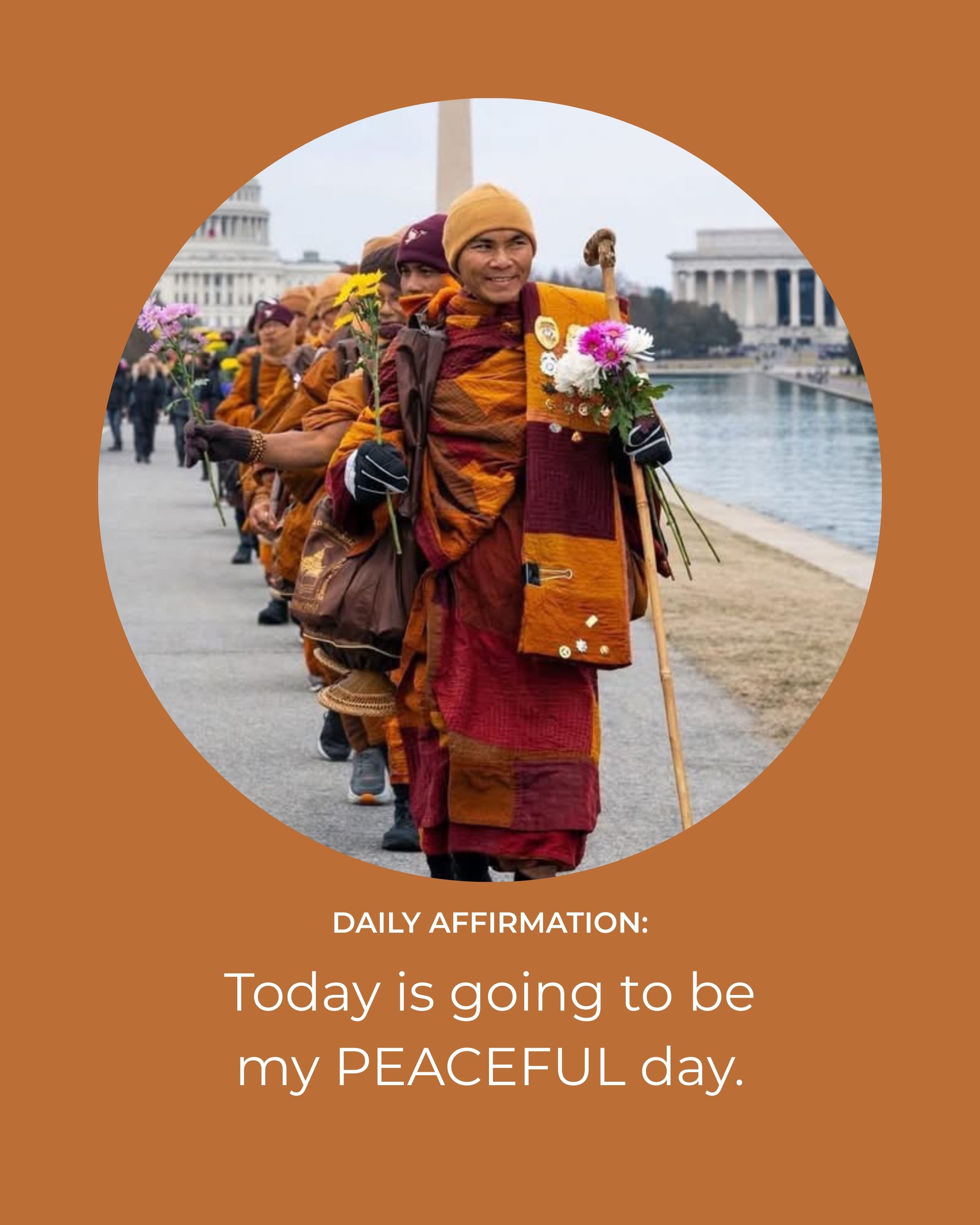
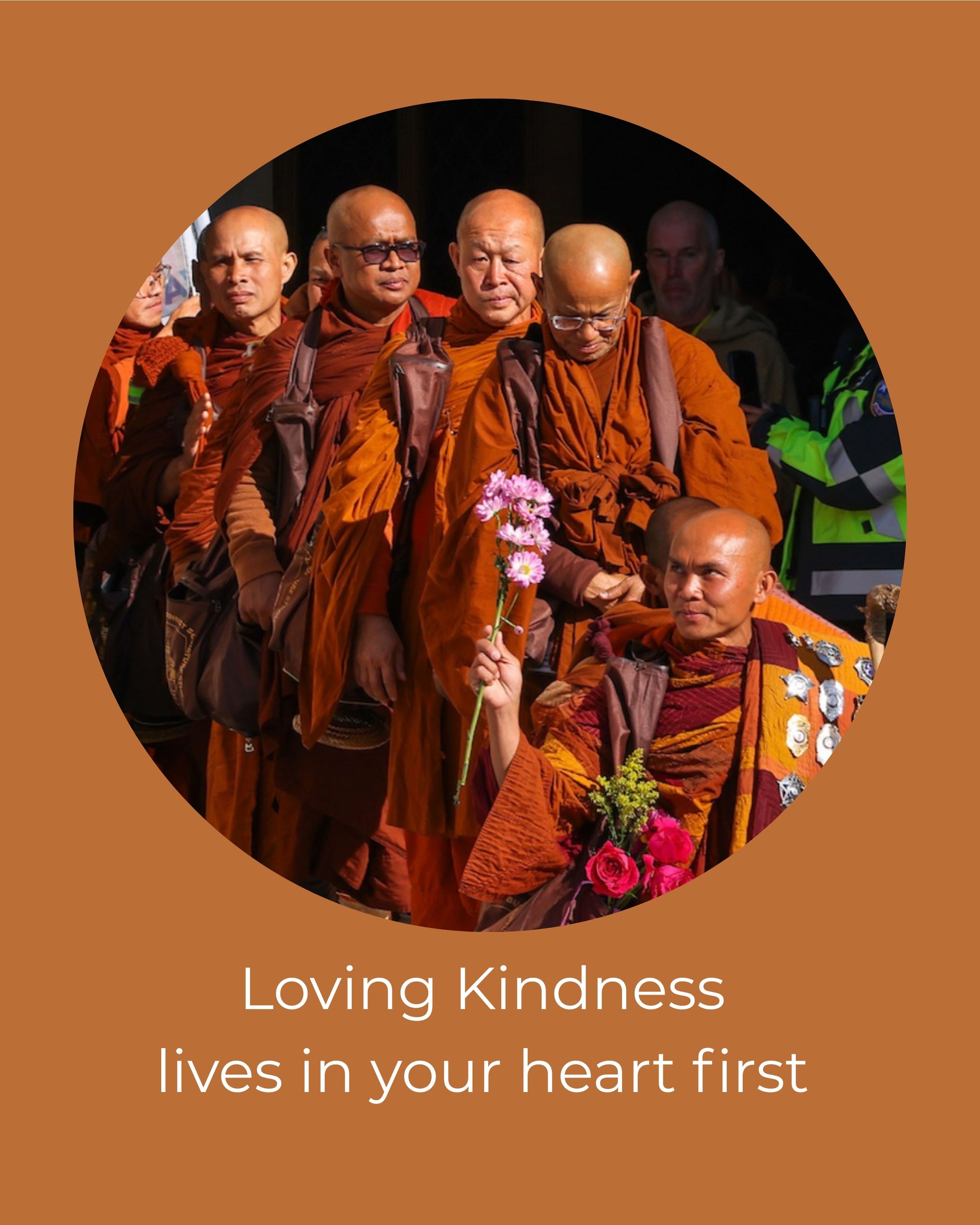
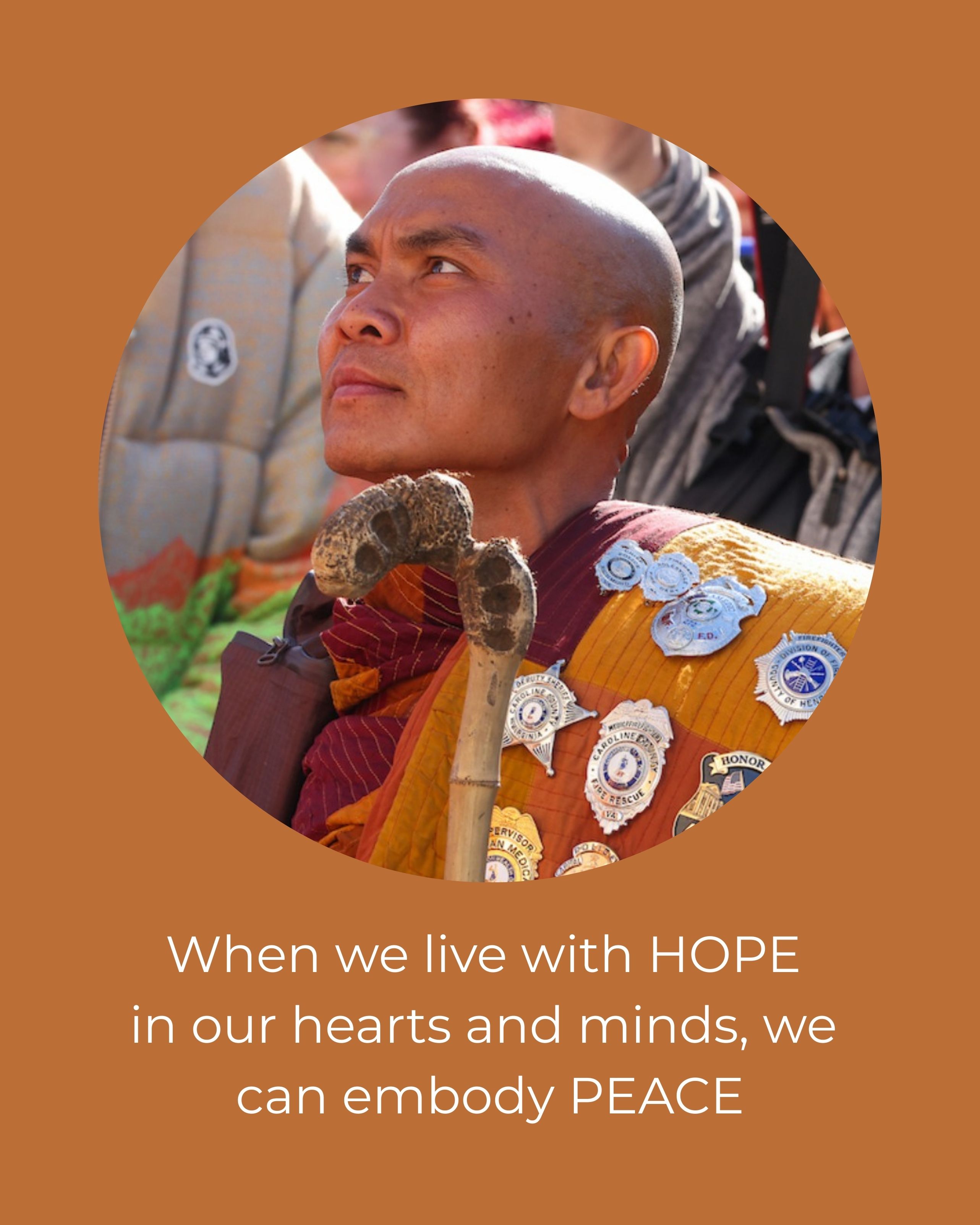
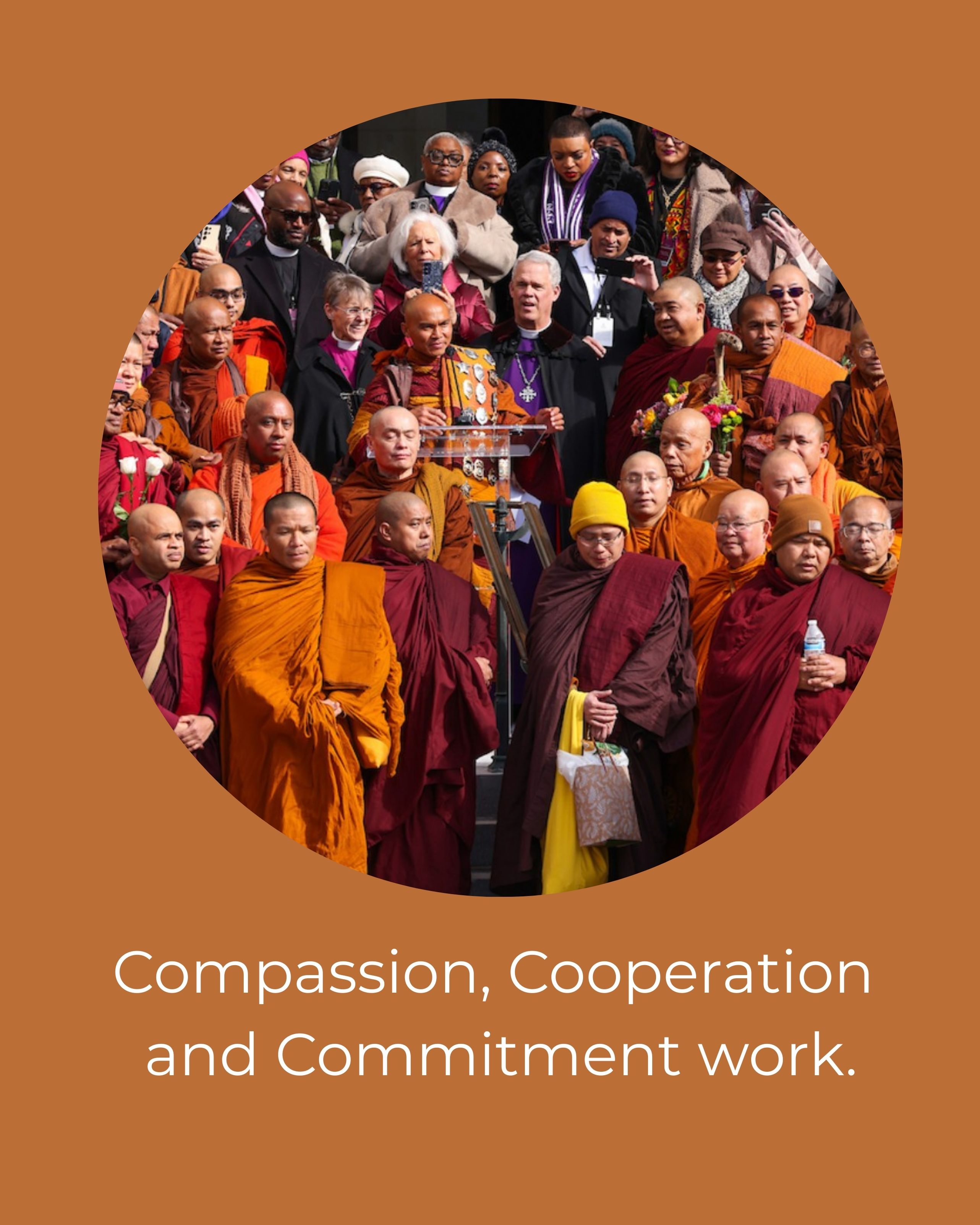
I was profoundly moved by the monks’ 2,300-mile Walk for Peace. After observing their unwavering devotion and embodied demonstration of loving-kindness, after listening carefully to their message, and after participating in the global meditation that marked the completion of their journey, I found myself quietly changed. Nothing dramatic happened outwardly. There was no spectacle, no emotional crescendo. Yet something within me settled in a way it had not before.
Watching them walk day after day, step after deliberate step, I began to understand something that years of inquiry and contemplation had not fully clarified. They were not striving to become enlightened. They were expressing something already integrated. Their presence was steady. Their message was simple. Their consistency carried more weight than any declaration ever could. In witnessing that, I felt my own striving soften.
For much of my life, I had subtly treated enlightenment as an attainment. I believed it required refinement, discipline, transcendence—an ascent toward something elevated and rare. Perhaps you have felt that same undercurrent: the quiet sense that you must improve, purify, or evolve into a higher state before you can finally arrive. That orientation seems noble, but it entails effort and tension.
What became clear to me through this experience is that enlightenment is not something we attain. It is what remains when everything false has fallen away. As I reflected on the monks’ journey, I saw that their power did not come from acquisition. It came from subtraction, an absence of pretence, an absence of urgency. and an absence of self-importance.
What remained was presence, compassion, and clarity.
I began examining my own interior landscape more honestly. I noticed the identities I had accumulated over time, like the capable one, the resilient one, the spiritual one, and even the awakened one. These roles were not inherently wrong.
They were adaptive, and they helped me navigate my experiences. They were still constructs that required maintenance, and they subtly reinforced a self I felt responsible for upholding.
As those layers loosened, I didn’t feel diminished. I felt relieved. Beneath the roles and narratives, there was something quieter and more stable. A grounded awareness that did not need to perform, a presence that did not require affirmation, and it was not grand or mystical but simple and steady.
I offer this to you not as a doctrine, but as an invitation to observe your own experience. Who are you without the roles you protect? Who are you beneath the beliefs you inherited about worth, achievement, or spiritual progress?
When conditioned perceptions begin to dissolve—especially those rooted in trauma, fear or separation—what remains is not emptiness. It is clarity.
This does not mean life becomes effortless or that growth ceases. Challenges continue, emotions still move, but the relationship to them shifts.
Reactivity softens, the need to prove weakens, and there is more space between stimulus and response. And kindly, there is less compulsion to defend an identity.
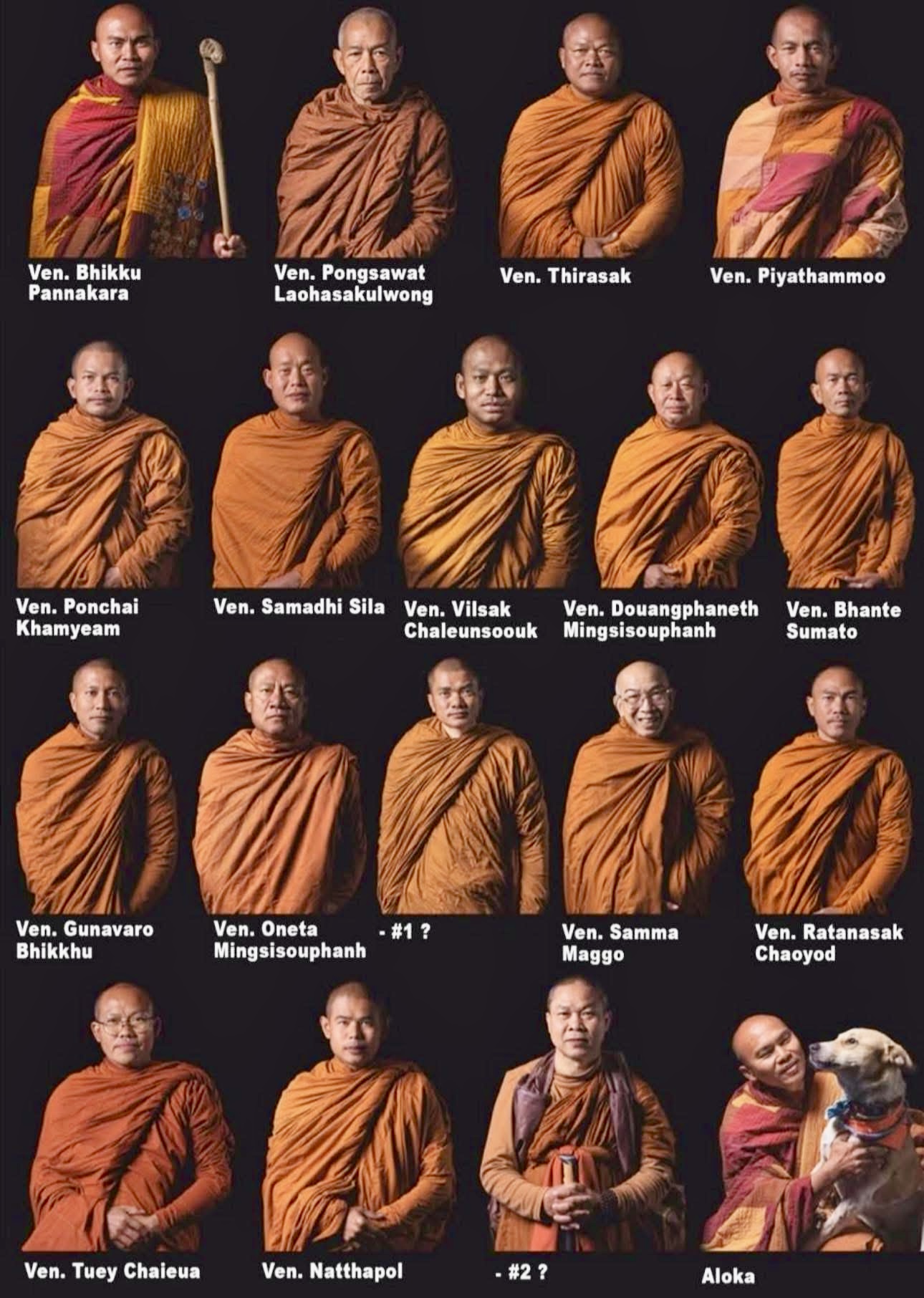
The monks walked 2,300 miles, yet the deepest movement I witnessed was inward stillness. Their journey illustrated a fundamental truth: enlightenment is not an addition to the self. It is the unveiling of what was never false to begin with. It is the residue of truth once illusion loses its hold.
I was quietly changed because I recognised that there is nowhere else to go. There is only the ongoing willingness to let what is untrue fall away. Nothing new needs to be acquired, and nothing extraordinary needs to be performed because life in itself is extraordinary.
When everything false drops away, what remains is steady, present, and profoundly human.
And it has been here all along.
Heart to Heart, Elizabeth
 ELIZABETH ELLAMES
Leave a Reply